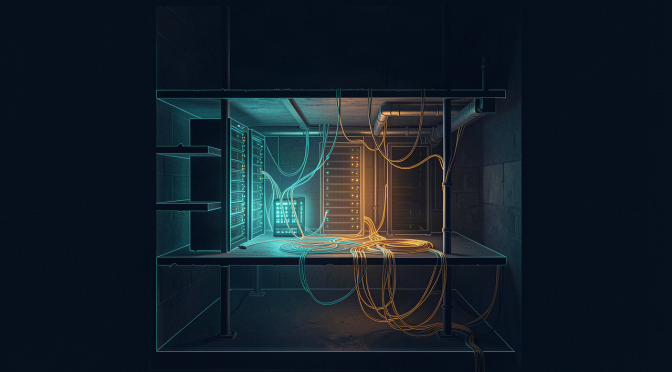
Nobody wants to read about boring infrastructure, so I’ll keep this short, but it’s the reason any of this works and it’s the bit people always skip.
My setup, in one breath: a Synology DS218+ NAS at home running the media stack, Home Assistant, and a reverse proxy (SWAG) behind Cloudflare. A Hostinger VPS in the cloud running Coolify, n8n, and the Mission Control stack. Tailscale stitching it all together into one private network. Docker everywhere, because Docker is how you stop fighting your own servers.
Three rules I kept the whole month:
No new firewall ports. Anything new gets exposed through the reverse proxy or over Tailscale. My perimeter is smaller now than when I started, which is the opposite of how these projects usually go.
Encrypted backups of everything that’s hard to rebuild. The assistant’s config, my Google tokens, the skills library. If the PC dies, the recovery path is documented and tested, not improvised.
Monitoring from both sides. Uptime Kuma watches from the internet, the assistant watches from inside. When a website went down last month, I knew before anyone else did, because two different systems both noticed and one of them texted me.
The boring truth about self-hosting: it’s not cheaper, it’s not easier, and it will occasionally ruin your evening. What it gives you is ownership. My assistant’s memory lives on my hardware. My automations don’t vanish when a startup pivots. My data is mine, my failure modes are mine, and my fixes are mine too.
I’d rather own my problems than rent someone else’s.